Vibration Analysis Level I - an Engineering Approach
Vibration Analysis Level I – An Engineering Approach is a comprehensive five-day program designed for professionals who need practical skills in vibration-based condition monitoring. Developed and Delivered By Jeruel, this course bridges introductory and intermediate concepts, making complex vibration theory accessible for maintenance teams.
Course Overview
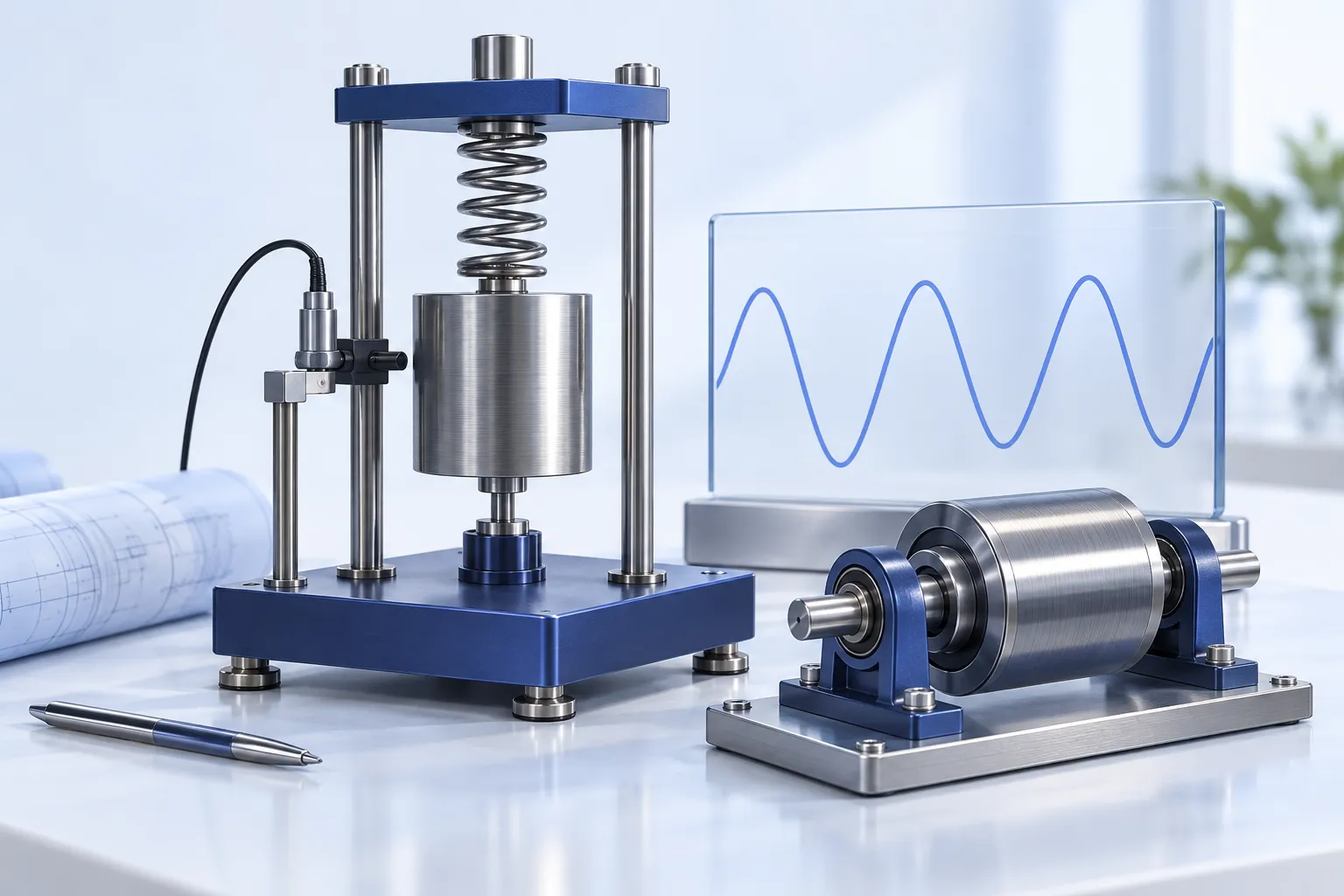
Vibration Analysis Level I: An Engineering Approach connects the principles of mechanical vibration with practical machinery monitoring. The course builds an understanding of mass, stiffness, damping, and natural frequency, then relates these concepts to the collection and interpretation of vibration measurements. Participants explore how simplified engineering models help explain the behavior observed in machinery.
The program combines single-degree-of-freedom system analysis with sensor selection, measurement direction, analyzer operation, and introductory spectrum interpretation. It examines time and frequency representations, common vibration patterns, and the role of monitoring routes and alarm settings. Participants develop a foundation for collecting useful measurements and discussing their significance, supporting a considered approach to vibration-based condition monitoring and further technical development.
Learning Objectives
By the end of the course, participants will be able to:
- Explain the roles of mass, stiffness, and damping in mechanical vibration.
- Formulate equations of motion for simplified single-degree-of-freedom systems.
- Calculate natural frequency and damping parameters for defined engineering examples.
- Relate sensor mounting and measurement direction to the information being collected.
- Explain the relationship between time waveforms and frequency spectra.
- Interpret basic spectral features and common machinery vibration patterns.
- Describe the role of measurement routes, baselines, and alarm settings in condition monitoring.
- Document measurement conditions and observations to support technical review.
Practical Application
Apply the learning to build a sound engineering foundation for machinery vibration monitoring.
- Informed measurement choices: Connect the machine's behavior and measurement purpose with suitable sensor locations, directions, and collection practices.
- Clear technical interpretation: Use vibration principles and basic spectra to explain observed patterns and identify suitable follow-up questions.
- Repeatable monitoring records: Document settings and operating conditions so future measurements can be compared and reviewed consistently.


- 18 Modules
- 4 Assessments
- Recorded Session Access
- Pre-Course Assessment
- Post-Course Assessment
- Course Completion Certificate
- Project Validation Certificate
- Maintenance Engineer
- Reliability Engineer
- Mechanical Engineer
- Condition Monitoring Technician
- Vibration Analyst
- Maintenance Technician
- Asset Manager
- Engineering Technician
- Plant Engineer
- Equipment Engineer
