Condition-based maintenance hours: the team's time spent catching failures early
Two technicians spend Tuesday morning running thermal imaging routes across the switchgear and motor control centres. Another takes vibration readings on the critical pumps while a fourth draws oil samples from the big gearboxes. Not one of them t...
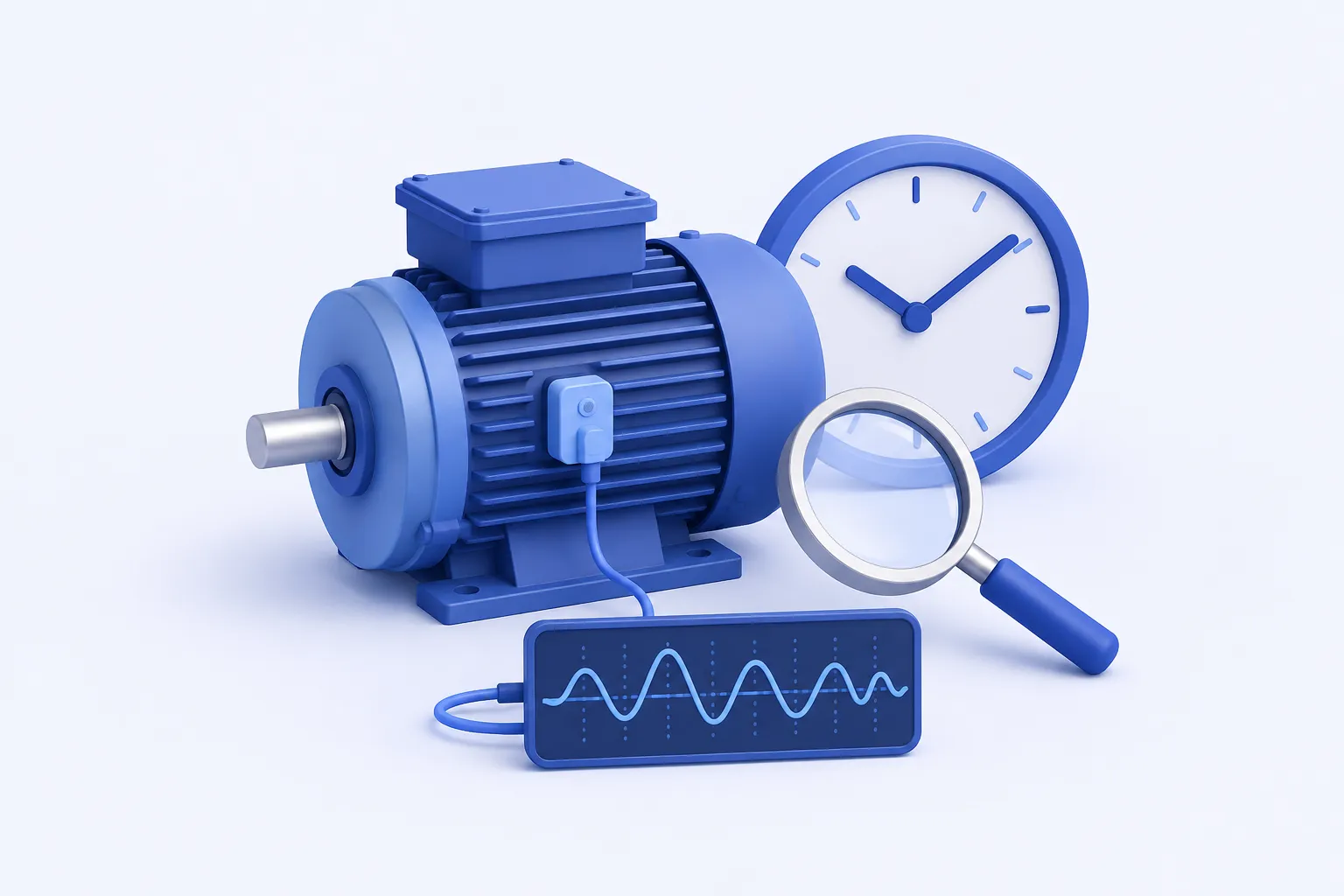
Two technicians spend Tuesday morning running thermal imaging routes across the switchgear and motor control centres. Another takes vibration readings on the critical pumps while a fourth draws oil samples from the big gearboxes. Not one of them turns a spanner. Back at the desk the data gets reviewed, trended against last month's, and two quiet problems are flagged for follow-up before either becomes a breakdown.
Those hours are an investment in failures that never happen. Condition-based maintenance hours measures what share of your team's total effort goes into that kind of early detection, the listening that turns tomorrow's emergency into today's planned job.
What it actually measures
CBM hours is the percentage of your total maintenance labour hours spent measuring, trending and comparing equipment condition against known standards, to catch and correct problems before they turn into failures. It includes internal, contractor and operator hours on vibration analysis, oil sampling, thermography, ultrasound, motor testing and scheduled failure-finding. As with the cost version, the hours cover the monitoring itself; the repair hours that follow a finding are corrective, and counting them here would overstate the size of your monitoring programme while hiding the reactive work it generates.
How to work it out
Condition-based maintenance hours = (CBM hours × 100) / Total maintenance labour hours
In a month a plant has 3,753 straight-time hours and 47 of overtime, with a contract oil-sampling crew adding 196 and operator vibration rounds another 24, and CBM work orders accounting for 876 hours.
CBM hours = (1,096 × 100) / 3,800 = 28.8%
At nearly 29%, condition monitoring is taking a large slice of the team's time, well above the rough guide most plants work to. Whether that is brilliant or wasteful depends entirely on what is being monitored. For a plant full of newer, well-instrumented equipment, where watching a machine is genuinely the smartest way to maintain it, a share this high can be a deliberate and excellent strategy. For a yard of older, simpler assets that a calendar task would protect just as well, the same number might mean the team is over-invested in monitoring at the expense of work that matters more.
The story the trend tells
This is the labour twin of CBM cost, and on its own it is only a snapshot. The value is in the trend, read alongside PM hours and corrective hours, because together they tell the story of a maintenance strategy growing up. In a young, reactive organisation, corrective hours dominate and condition monitoring barely registers. As the programme matures, CBM hours climb while corrective hours fall, not by coincidence but by cause: more and more failures are being caught early, on a sensor route, and handled on a plan instead of in a scramble. A rising CBM line with a falling corrective line behind it is one of the clearest pictures of progress a maintenance leader can show.
The reverse pattern is worth watching for too. If CBM hours are rising but corrective work is not falling at all, the monitoring may be going through the motions, readings taken and filed but never acted on. The hours only pay off when the findings turn into timely repairs.
What good looks like
A common working guide puts condition-based work at roughly a sixth of total maintenance hours, but treat that as the loosest of anchors. In practice the sensible range is enormous, from almost nothing to as much as two-fifths of all maintenance effort, depending entirely on the age, type and instrumentation of your assets. A higher share is appropriate, and achievable, for newer, technically advanced equipment where non-invasive monitoring is the preferred strategy; a much lower share is perfectly reasonable for older or simpler assets where condition techniques have less to offer. Of all the techniques, vibration analysis tends to earn its keep most reliably on rotating equipment, which is why it is usually the first one a maturing programme invests in and the one that draws the largest share of these hours.
Where it can mislead you
- The hours are monitoring only. Repair hours that come out of a CBM finding belong in corrective; mixing them in here overstates your monitoring investment while understating the reactive load it is meant to be shrinking.
- Hold the time basis steady, month to month, or the trend breaks and the comparison lies.
- Your work order system must tag CBM distinctly from PM and corrective, or the metric cannot be measured at all.
- If operators perform monitoring rounds, include their hours in both the top and the bottom of the fraction, or the ratio quietly drifts.
- Offsite monitoring, such as samples sent away for lab analysis, is hard to capture and often left out, so document any exclusions and keep them consistent so the trend can be read with confidence.
CBM hours shows how much of your team's effort goes into the quiet, undramatic work of listening to machines. It is the labour behind every breakdown that turned into a planned repair, every weekend call-out that never came. Watching it grow as corrective work shrinks is one of the surest signs that a maintenance organisation is leaving firefighting behind and coming of age.