Contractor hours: how much of the work your own team actually delivered
A maintenance manager reviews the monthly report and sees that contractor spend is up. She also knows a turnaround ran that month and three specialist contractors were on site for two weeks. But she cannot tell whether the increase reflects that s...

A maintenance manager reviews the monthly report and sees that contractor spend is up. She also knows a turnaround ran that month and three specialist contractors were on site for two weeks. But she cannot tell whether the increase reflects that specific event or a broader drift toward depending on contractors.
Separating the hours tells a cleaner story than the dollars alone. Contractor hours shows what fraction of the physical work on your site your own workforce actually delivered.
What it actually measures
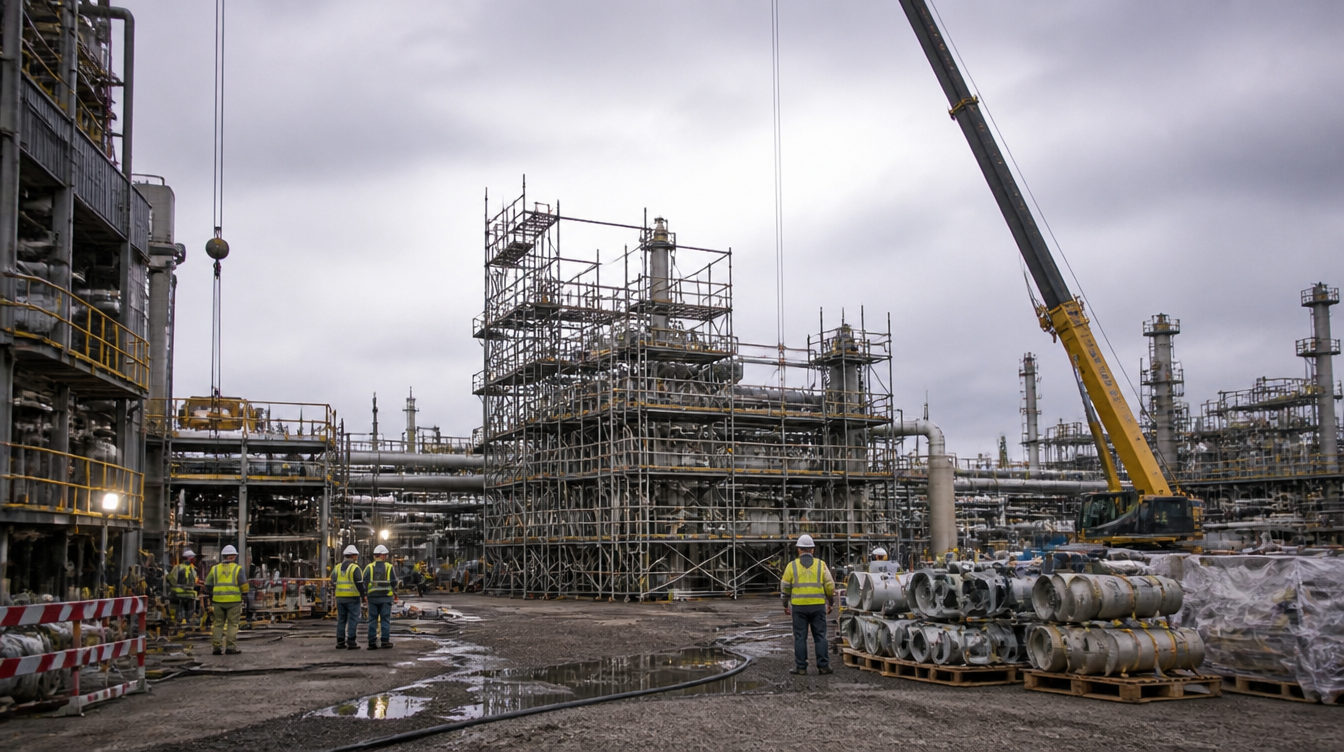
Contractor hours is the percentage of total maintenance labour hours on site that were worked by contractors rather than your own employees. It counts every hour a contractor spends on maintenance, routine work as well as outage, shutdown and turnaround activity, and includes hours on end-of-life equipment replacement. Hours spent on plant expansion or capital improvement are excluded.
How to work it out
Contractor hours (%) = (Contractor labour hours × 100) / Total maintenance labour hours
In a month, internal craft labour came to 860 hours and contractors worked 440 (roofing, a chiller service, a cooling-tower clean and a thermographic scan), for 1,300 hours in total:
Contractor hours = (440 × 100) / 1,300 = 33.8%
A third of the labour that month came from outside the organisation. The roofing project and the tower clean account for most of it, so it may be quite appropriate for the period, but it is a figure worth watching month to month.
What good looks like
Best-in-class values vary a great deal by sector and facility, so there is no single target. Top performers do use a complement of contractors, for specialty crafts, peak workloads such as outages, and tasks needing specialist tools. The sensible approach is to find sector-relevant benchmarks through an industry association and then track your own trend consistently.
The trade-off behind the number
Different organisations sit at very different points on a spectrum, from doing nearly everything in-house, through using contract staff under their own supervisors, to contracting maintenance out almost entirely. Each step along that line trades a little control, and a lot of equipment familiarity, for flexibility. The people who work your machines day in and day out come to know their quirks, their history, the particular sound they make before they fail; a rotating cast of contractors, however skilled, rarely builds that intimacy. There is no single right place to stand on the spectrum, but the contractor hours figure is how you see where you actually are, and whether you are moving along it on purpose or by neglect.
Where it can mislead you
- Contractor hours and contractor cost measure different things. A site can run low contractor hours but high contractor cost if those contractors carry high day rates for specialist work, so read the pair together.
- If operators perform maintenance and you capture those hours, include them consistently in both the top and bottom of the fraction.
- Watch the knock-on effect on your other ratios. If you leave contractor hours out of the denominators of measures like direct-to-indirect or overtime, those numbers quietly distort; decide how you count contractors and apply it everywhere the same way.
- A rising trend with no matching rise in specialty or shutdown work is a prompt to ask whether your permanent workforce is sized correctly.
Contractor hours shows you, in labour rather than money, how much of your maintenance effort your own team is actually delivering. Read beside contractor cost, it separates the deliberate, sensible use of outside specialists from a quiet, creeping dependency that a right-sized in-house team might serve better and cheaper.