Availability, demystified
Availability sounds like the simplest word in the plant: was the asset available or not? Then you go looking for a definition and find half a dozen, each with its own formula, and the simple word suddenly feels slippery. The good news is that the ...
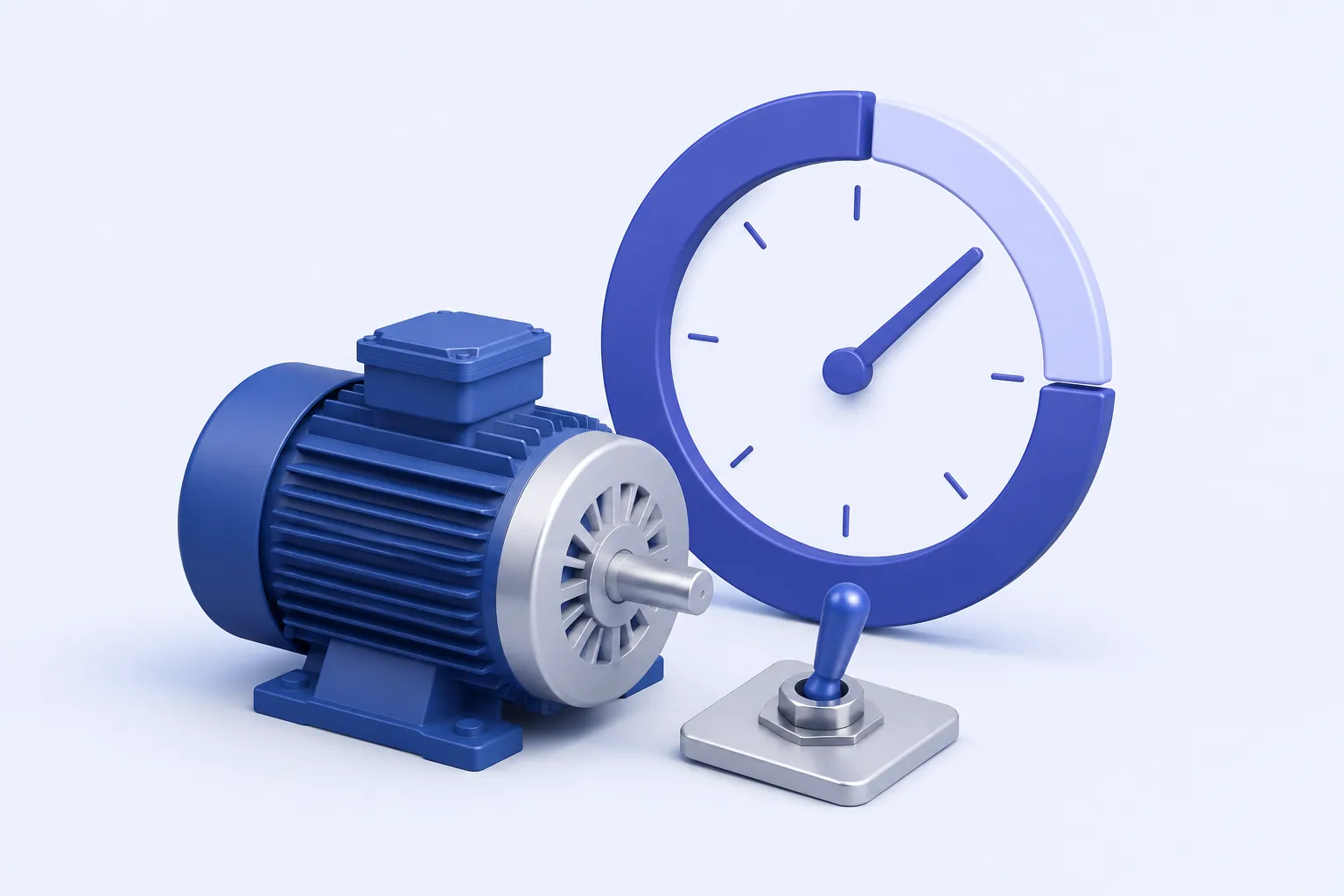
Availability sounds like the simplest word in the plant: was the asset available or not? Then you go looking for a definition and find half a dozen, each with its own formula, and the simple word suddenly feels slippery. The good news is that the version you need most often is also the plainest.
The plain plant definition
At the plant level, availability is the share of scheduled time the asset is actually running. You take the uptime, the hours it was genuinely operating, and set it against the hours it was scheduled to operate. This is the sense of the word used inside metrics like overall equipment effectiveness.
Availability = Uptime (hours) / Scheduled time (hours) × 100
Notice the denominator is scheduled time, not the full calendar. Just as with OEE, you do not penalise the asset for hours it was never meant to run.
Why engineers keep stricter versions
The reason several definitions exist is that, in reliability work, people need to be precise about exactly which kinds of downtime they are willing to count. Should preventive maintenance count against availability, or only failures? Should the hours spent waiting for a spare, or for a permit, count, or only the active repair? Each answer gives a slightly different flavour, and three are worth knowing by name, because they form a natural ladder.
Inherent availability looks at the design alone. It counts only the active repair time from corrective maintenance and ignores preventive work and every delay, which is why it is usually calculated on paper during engineering design. It is built straight from two of the mean metrics:
Inherent availability = MTBF / (MTBF + MTTR)
Achieved availability is a step closer to reality: it adds preventive maintenance into the downtime, but still leaves out the administrative and logistic delays, the waiting for parts, people and paperwork.
Operational availability is the one you actually live with. It folds in everything, corrective and preventive work and all the real-world delays, and it is built from mean time between maintenance and mean downtime rather than the idealised pair. It is always the lowest of the three, and the gap between it and the inherent figure measures how much your operation loses to things the designer never modelled.
The ladder, in numbers
It helps to picture the three as a descending ladder for the same machine. A pump might be designed for around ninety per cent inherent availability; add the preventive maintenance it really needs and the achieved figure slips to perhaps eighty-five; add the parts delays, the permit waits and the queueing for a technician, and the operational availability you actually experience settles nearer eighty. None of those numbers is wrong; they simply count different things, which is exactly why you must say which one you mean before you quote it. An inherent figure and an operational one for the same asset will never match, and comparing one plant's inherent number against another's operational number is a classic way to reach a confidently false conclusion.
The trap that matters most: availability is not reliability
Of all the confusions around this word, one does real damage: treating high availability as proof of good reliability. They are not the same thing, and an asset can score beautifully on one while failing badly on the other. Picture a machine that breaks down constantly but is always back running within minutes. Its availability can look excellent, because so little scheduled time is actually lost, while its reliability, how often it fails, is genuinely awful. The fast repairs are masking a sick machine. This is why availability must always be read next to a reliability measure such as MTBF: availability tells you how much time you lost, reliability tells you how often trouble struck, and a plant that watches only the first can convince itself all is well while the failures, and their risks, quietly mount underneath.
Where it can mislead you
- Define the asset boundary first. Are you measuring one machine, a system, or a whole line? Availability only means something once everyone agrees what is inside the boundary.
- Be clear which flavour you are quoting. Inherent, achieved and operational figures describe the same asset but will not match, because each counts different downtime.
- Read it next to reliability. High availability can hide a machine that fails constantly but is repaired fast, so never let it stand in for MTBF.
- Mind the idle-versus-downtime line. Count hours the asset was never scheduled to run as downtime and availability is understated; count genuine downtime as idle and it is flattered.
Availability is, at heart, the share of scheduled time your asset is actually running. Keep the plain version at the front of your mind, define the boundary, measure uptime against the time you meant to run, and reach for the stricter inherent and operational flavours only when the engineering demands it. Above all, never let a healthy availability number lull you into ignoring how often the asset is really failing beneath it.