Leading and lagging indicators: the scoreboard versus the steering wheel
The scoreboard at the end of a match tells you who won. It is honest, final and completely unchangeable. The steering wheel, by contrast, is what the driver uses during the race to influence where things end up. A plant needs both kinds of informa...
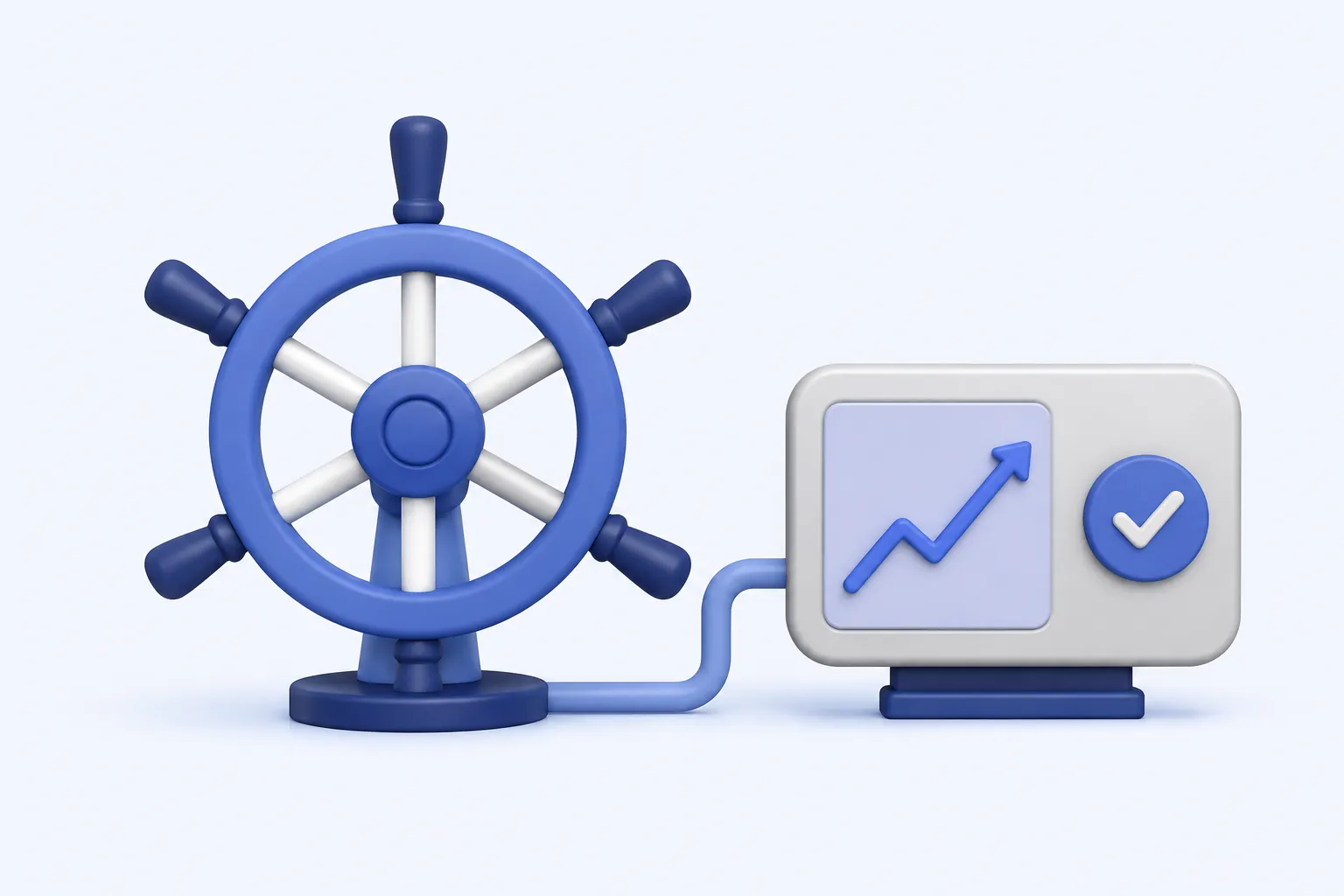
The scoreboard at the end of a match tells you who won. It is honest, final and completely unchangeable. The steering wheel, by contrast, is what the driver uses during the race to influence where things end up. A plant needs both kinds of information, and confusing one for the other is how good teams end up managing entirely by hindsight.
That is the difference between lagging and leading indicators, and learning to tell them apart is one of the most useful habits in maintenance and reliability.
Two kinds of measure
A lagging indicator measures performance after a result has settled into a pattern. It tends to be easy to measure but hard to influence, because by the time you can see it, the thing it counts has already happened. Last month's breakdowns, last quarter's maintenance cost, the availability you achieved: all are the scoreboard. They are true, and they are largely fixed.
A leading indicator measures an input or an activity, something happening now that shapes a result still forming. It tends to be the opposite: harder to measure cleanly, but easy to influence, because it is about what your team is doing today. How much planned work you completed on schedule, your PM compliance, your planned backlog: these are the steering wheel. They hint at what is coming while there is still time to act on it.
A simple way to feel the difference
If the distinction still feels abstract, borrow an analogy from dieting. The calories you eat and the calories you burn are leading indicators: easy to influence, since they are choices you make each day, but fiddly to measure precisely. The reading on the bathroom scale is the lagging indicator: trivially easy to measure, but impossible to influence directly, because losing weight is not itself an action, only the result of one. A plant that manages purely by the scale, the cost report, the breakdown count, is forever reacting to a number it can no longer change.
The part that catches people out
Here is what surprises most people: the same measure can be lagging for one thing and leading for another, depending entirely on where in the chain of cause and effect you happen to be standing.
Take PM compliance, how much of your scheduled preventive maintenance actually got done. Viewed as the result of how well your team executed its work this month, it is a lagging indicator: the work is finished, the number is in. But viewed as a sign of future equipment reliability, the very same figure is leading, because the more PM you complete on time, the more likely the equipment is to stay reliable later. Not everyone slices it the same way, and some authorities treat PM compliance as purely lagging; the point is less to win the classification argument than to ask, of any measure, what it is a result of and what it is a sign of.
| Indicator | Lagging result of | Leading indicator of |
|---|---|---|
| PM compliance | work execution | future equipment reliability |
| Proactive work | how work was managed | future production performance |
| Planned backlog | planning effort so far | the upcoming schedule and reliability |
| MTBF | equipment reliability so far | operational execution to come |
| Maintenance cost | the whole process | a final scoreboard number |
Why it matters
Almost every maintenance metric carries a quiet label of leading, lagging, or both. Cost and availability numbers tend to lag; planning, scheduling and compliance numbers tend to lead. Once you start reading them this way, your metrics stop being a flat list and become a chain of cause and effect, where the leading numbers you move today turn into the lagging results you report tomorrow.
One warning applies to the leading indicators in particular: because they measure activity rather than outcome, they are easier to game. A good indicator should be hard to manipulate just to look good. If completing a PM comes to mean only ticking a box, compliance will climb while reliability does not, and you will have steered confidently in the wrong direction. The cure is to keep watching the lagging result the leading measure is supposed to move, and to grow suspicious the moment the two stop agreeing.
Lagging indicators tell you the score; leading indicators let you steer. The wise plant watches both, never trusts a leading number it cannot tie to a result, and never forgets that today's leading measure is tomorrow's lagging fact.