Proving the return on maintenance training
Every maintenance manager has heard the question, and dreaded it. You ask for budget to train the team, and management asks back: what is the return on this investment? Skill improvements feel real but are stubbornly hard to put in pounds or dolla...
Every maintenance manager has heard the question, and dreaded it. You ask for budget to train the team, and management asks back: what is the return on this investment? Skill improvements feel real but are stubbornly hard to put in pounds or dollars, and a vague answer rarely loosens the purse strings. Here is a method that turns the vague into the provable.
Maintenance training return on investment is simply the ratio of the benefit of training to its cost. The trick is not the arithmetic at the end; it is setting things up beforehand so the benefit can actually be measured.
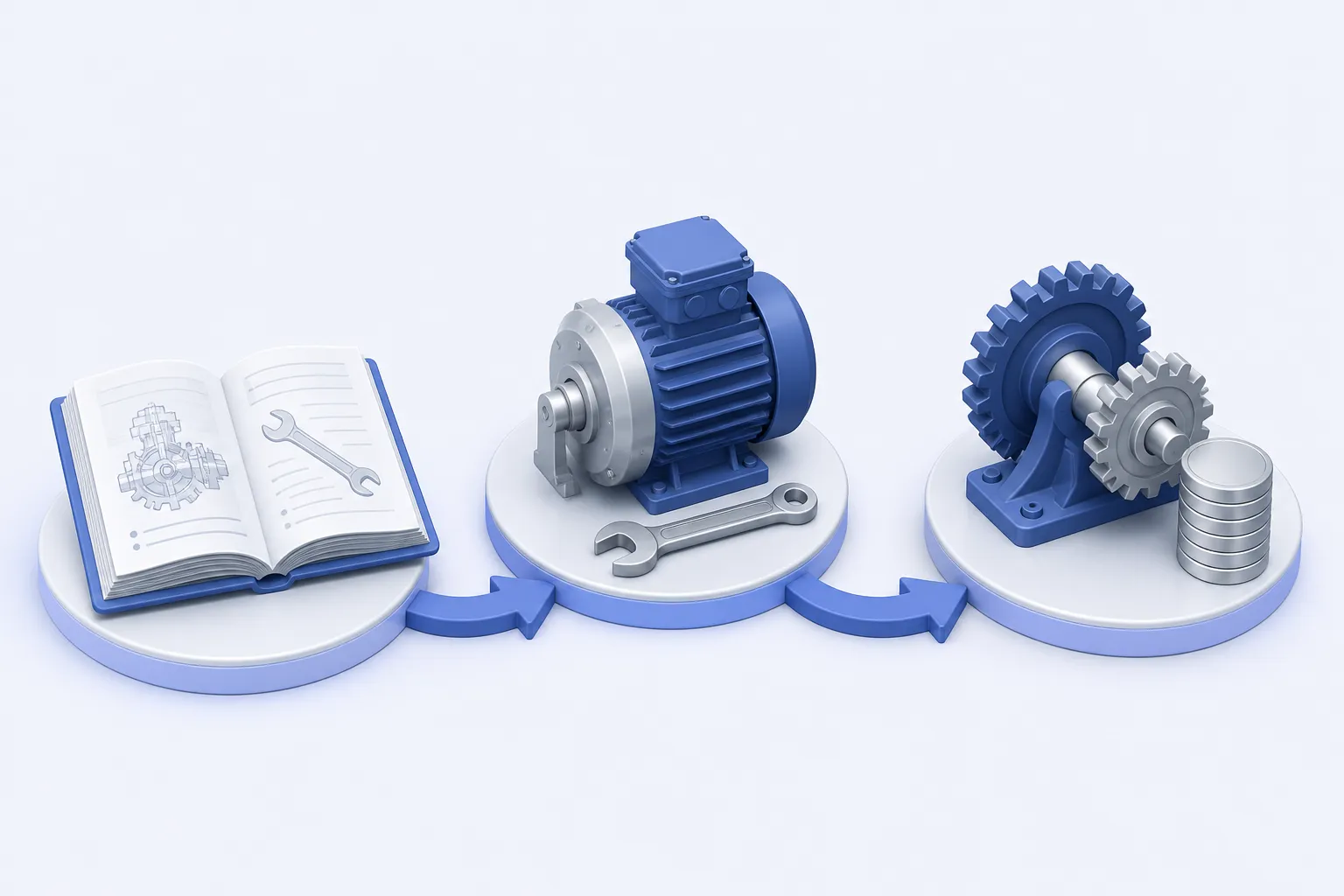
The method, step by step
- Pick a process where skill changes the result. Choose something with real human involvement and a measurable output; the classic example is lubrication routes that take longer than they should.
- Establish a before metric. Measure where you stand today, say man-hours per lubrication route, and set a clear improvement goal.
- Find the skill gap. Work out which missing skills are dragging the metric down, through testing or observation by a seasoned technician.
- Train to close the gap. Build a programme aimed squarely at those goals, and keep careful track of what it costs.
- Measure the after metric. Once trained, measure the same thing again. The difference is your quantifiable improvement.
- Convert the improvement into money using a cost per man-hour.
- Work out the ROI.
Training ROI = Demonstrated saving ($) / Training cost ($) × 100
A worked example
To see how it comes together, take a hypothetical lubrication technician who completes 4 routes a week. Before training, each takes 9 man-hours; after, 7. That is 2 hours saved per route, across 4 routes a week, over a 50-week year.
Hours saved = 2 × 4 × 50 = 400 hours a year
Saving = 400 × $45 per hour = $18,000
Training ROI = ($18,000 / $6,000) × 100 = 300%
In this illustration the programme cost $6,000 and returned $18,000 of recovered time in its first year, every dollar bringing back three. The numbers are invented to show the method, not a result you should expect; your own will be your own. But the shape of the argument is what wins budgets: a specific, measured saving set against a known cost, rather than a plea to trust that training helps.
Why training pays back at all
It is fair to ask why training should return anything at all, and the honest answer rests on a single sobering estimate: something like seventy to eighty per cent of equipment failures are self-induced, the result of human error or missing knowledge, a part fitted wrong, a tolerance misjudged, a warning sign not recognised. If most failures trace back to what people do and do not know, then closing skill gaps is not a soft, feel-good benefit; it is direct failure prevention, and the savings surface as fewer breakdowns and less rework. That is the mechanism underneath every training-ROI calculation, and it is why an old line keeps being quoted: if you think training is expensive, you have not priced ignorance.
How much, and one honest caution
For a sense of scale, organisations that take training seriously tend to spend somewhere between roughly one and a half and four and a half per cent of payroll on it, and yet only a small minority of manufacturing plants give their people more than a single working week of training a year, which is itself a sign of how widely under-invested the area is. But more is not automatically better, and one caution keeps the discipline honest: training for its own sake, however satisfying, does not necessarily serve the business. The before-and-after method matters precisely because it forces you to say, in advance, exactly what the training is meant to change, which both sharpens the programme and guards against crediting it for improvements it did not cause.
Why it is worth the effort
The discipline of measuring before and after does more than win a budget argument. It forces you to be clear about exactly what you expected the training to change, which makes the training itself sharper and easier to evaluate. And it travels far beyond lubrication: any process where weak skills are causing inefficiency can be measured the same way.
Measure before, train, measure after, convert the gain to money. Prove a positive return even once, on one well-chosen process, and the next training budget becomes a far easier conversation, because you will have turned "trust me, it helps" into a number nobody can wave away.