Maintenance shutdown cost: the turnaround bill, turned into a number you can budget
Once a year the plant goes quiet. The operators stand down, the contractors stream through the gate, and for two weeks the maintenance team works through a list that has been building since the last outage: vessels opened and entered, heat exchang...

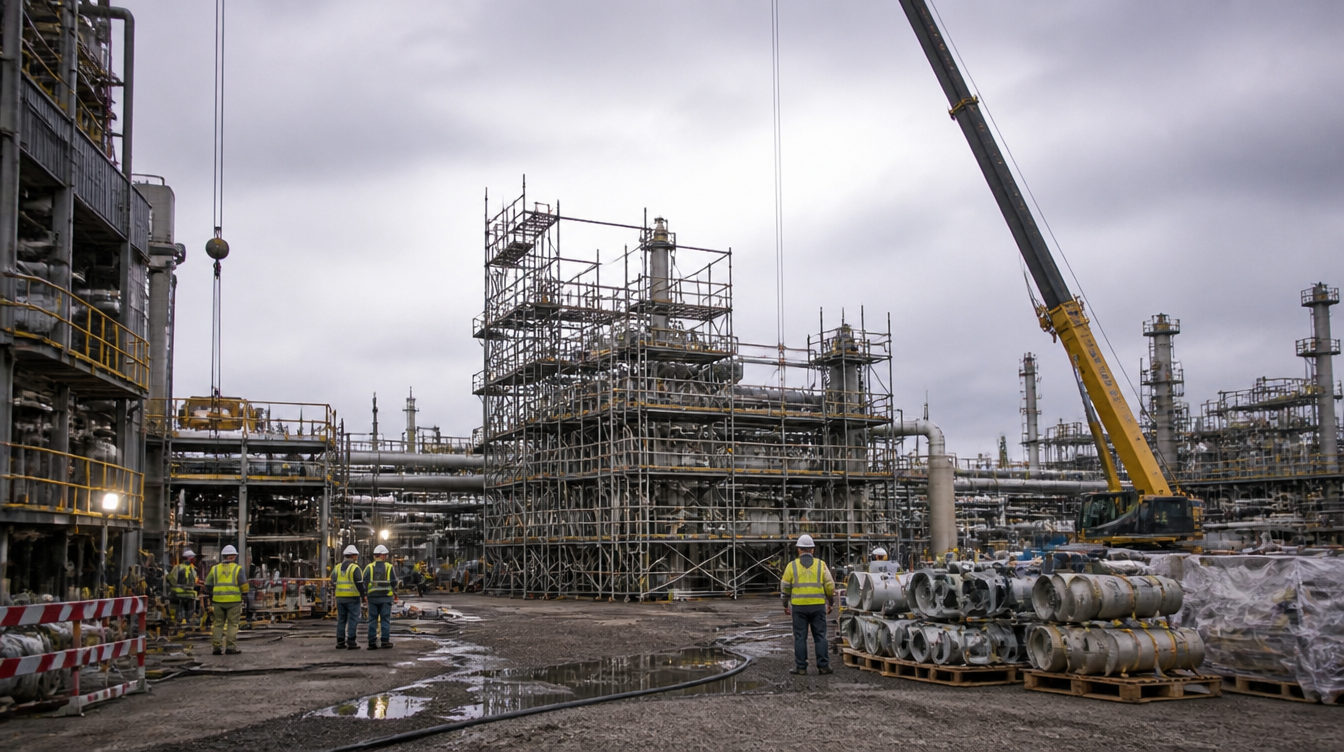
Once a year the plant goes quiet. The operators stand down, the contractors stream through the gate, and for two weeks the maintenance team works through a list that has been building since the last outage: vessels opened and entered, heat exchangers pulled and cleaned, pipework inspected, valves overhauled, all the work that simply cannot be touched while the plant is running.
Then the invoices land, and the share of the annual budget the turnaround just swallowed is almost always larger than anyone braced for. A shutdown can spend a sizeable slice of a whole year's maintenance money in a handful of weeks. Tracking that honestly, year after year, is the first step to budgeting for it like the major project it is, rather than the annual shock it tends to be.
What it actually measures
Maintenance shutdown cost is the percentage of your total annual maintenance cost tied to a planned shutdown, outage or turnaround. It takes in everything the event consumes: the months of preparation and planning, the shutdown labour from your own crews and the army of contractors who join them, the materials and spares, and the temporary facilities and equipment rental, the scaffolding, cranes and power, that exist only to serve the maintenance work.
One thing is deliberately left out. Capital project work slipped into the outage window, a plant expansion or a new line built while everything is conveniently shut down, is investment, not upkeep, and it belongs in a different budget. Mixing it in here would make your maintenance turnaround look far more expensive than it really is.
How to work it out
Maintenance shutdown cost = (Total shutdown cost ($) × 100) / Total annual maintenance cost ($)
A turnaround runs to $390,000 once you add up planning, equipment rental, contract and internal labour, and materials. The plant's total annual maintenance cost is $7,200,000.
Maintenance shutdown cost = ($390,000 × 100) / $7,200,000 = 5.4%
Just over five cents in every maintenance dollar went on the turnaround. One year's figure is just a data point; tracked across several outages it becomes something far more useful, the credible starting point for the next shutdown's budget and an early warning when scope is quietly creeping upward from one event to the next.
Why a turnaround is its own kind of project
A shutdown breaks the normal rhythm of maintenance completely, and that is what makes its cost behave so differently from the month-to-month spend. For most of the year work is spread thin and steady; during a turnaround a year's worth of the heaviest, most intrusive jobs is compressed into a window measured in days, with hundreds of extra hands on site and a critical path tying them all together. The pressure is immense, because every day the plant stays down is a day it earns nothing, so the incentive to rush is constant and the cost of overrunning is steep.
The other thing that makes a turnaround unpredictable is what it uncovers. You cannot fully know the state of a vessel until you open it, and an opened-up plant has a habit of springing surprises: corrosion worse than expected, a component that fails inspection, a repair that turns out to need three more. This emergent work is not a planning failure; it is the nature of the beast. The teams that come in on budget are not the ones that somehow predict every surprise, but the ones that expect surprises in general and leave room for them.
What good looks like
Best-in-class values vary so widely by industry and plant type that there is no universal target worth quoting; a refinery and a packaging line live in different worlds. The strongest practice is to benchmark against your own history, outage on outage, and to compare notes with peers in your own sector. Beyond the headline number, two disciplines mark out the teams that run turnarounds well.
The first is how they fill the window. They plan their work to occupy only about ninety per cent of the available shutdown time, holding back roughly a tenth as deliberate contingency for the emergent work they know is coming. Schedule to a hundred per cent and the first surprise blows the whole timeline. The second is how they handle scope. They freeze the work list several weeks before the outage starts, so that late additions have to clear a high bar rather than wandering in unchallenged. A scope still growing in the final fortnight is a budget that has already lost control.
Where it can mislead you
- Measure it annually. A turnaround happens too rarely for a monthly figure to carry any meaning.
- Capture the cost comprehensively. Planning fees, temporary facilities and rented equipment tied to the maintenance work all belong in the numerator; capital expansion work squeezed into the same window does not.
- Put the cost tracking in place before the shutdown starts. Reconstructing it after the fact always leaves money uncounted and the figure flattering.
- Budget explicitly for emergent work rather than pretending it will not appear. A turnaround costed as though every job is known in advance is a turnaround destined to overrun.
- Expect planning and preparation to be a modest but real slice of the total. If that slice balloons, it usually means costs are being misclassified rather than that planning was unusually dear.
A turnaround is the largest single thing the maintenance budget does all year, and for many plants it is also the least predictable. Expressed as a share of annual spend and tracked patiently across the years, it stops being a frightening surprise and becomes what it ought to be: a planned, benchmarked, defensible investment in another year of safe running.