Preventive maintenance hours: how much of your team's time goes to scheduled prevention
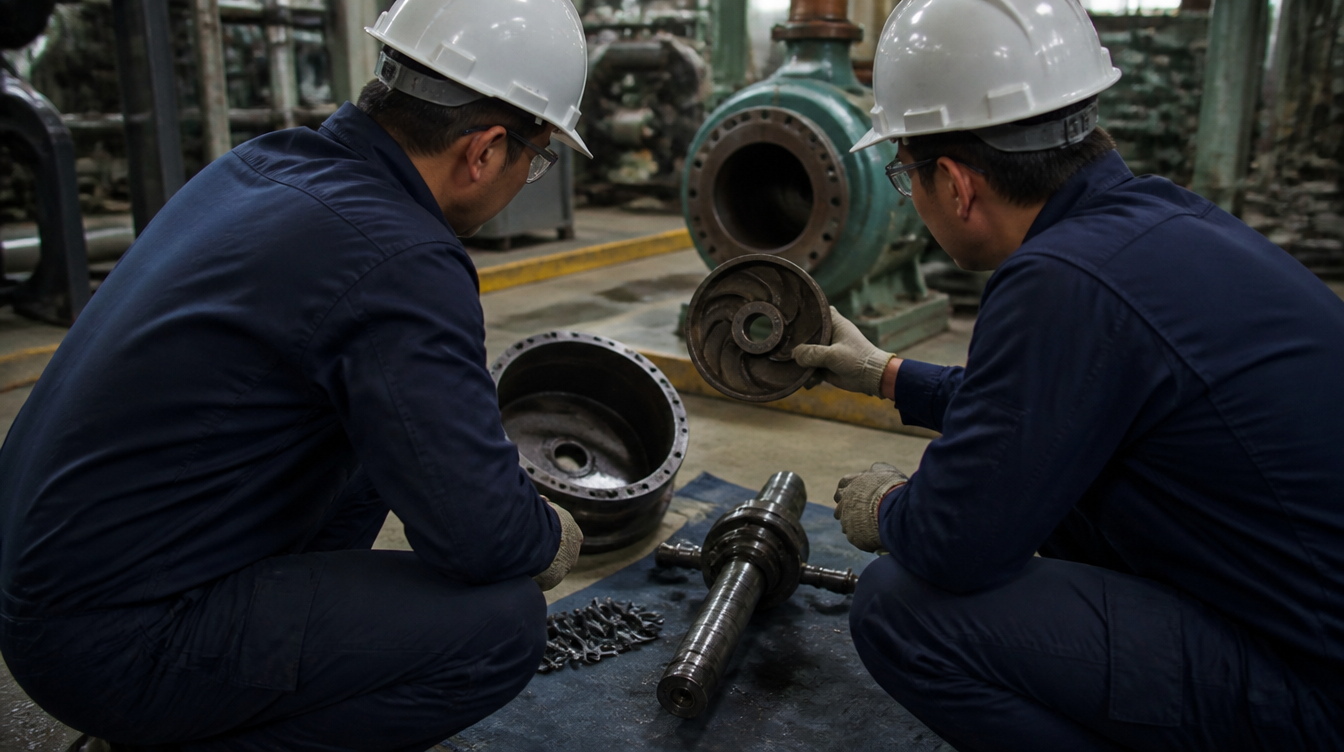
Every Monday a crew works through the weekly preventive routes: lubrication points, belt tensions, filter swaps, the round of visual checks. It is methodical, unglamorous work, and nobody ever won an award for it. Yet those hours are a deliberate ...

Every Monday a crew works through the weekly preventive routes: lubrication points, belt tensions, filter swaps, the round of visual checks. It is methodical, unglamorous work, and nobody ever won an award for it. Yet those hours are a deliberate decision about where the team's time goes, made every week whether anyone notices or not.
Preventive maintenance hours makes that decision measurable. It tells you what share of your workforce's effort is being spent heading off failure, rather than reacting to it or chasing its early signs.
What it actually measures
PM hours is the percentage of your total maintenance labour hours spent on fixed-interval preventive tasks, done on a time or run-hours schedule to slow or prevent wear. It includes the internal, contractor and operator hours booked against PM work orders.
How to work it out
Preventive maintenance hours = (PM hours × 100) / Total maintenance labour hours
In a month a plant has 1,800 straight-time hours and 125 of overtime, with another 150 of operator PM, and PM work orders account for 452 of those hours.
Preventive maintenance hours = (452 × 100) / 2,075 = 21.8%
At nearly 22%, prevention is claiming a solid slice of the team's time, comfortably inside the range most plants aim for. Whether that is right depends entirely on what you are maintaining.
What good looks like
A common working guide puts fixed-interval PM somewhere in the region of 15 to 25 per cent of total maintenance hours, with preventive and condition-based inspection together often making up more than half of a mature programme's effort. Treat the band as a loose anchor rather than a hard target. A lower share is perfectly reasonable for newer, well-instrumented equipment backed by a strong condition-based programme; a higher share is sensible for older assets where scheduled tasks are still the best defence available.
What the calendar can and cannot prevent
There is a deeper reason to hold PM in check, and it comes from decades of reliability research into how equipment actually fails. The intuitive picture, that machines wear out predictably with age so a timely overhaul resets the clock, turns out to describe only a minority of failures. Most failure modes are not age-related at all; they strike more or less at random, or cluster in the period just after an intrusive job. Fixed-interval PM is the right tool for the genuine wear-out tasks, the lubrication, the cleaning, the replacement of parts that really do degrade with time and use. For everything else, opening a machine on a calendar does nothing to prevent failure and can quietly cause it. That is why a thoughtful programme keeps fixed-interval PM trained on the tasks that earn their place and steadily hands the rest to condition monitoring, which can watch for the random faults a calendar will always miss.
There is also a quiet test of whether these hours are well spent: what they turn up. Effective preventive and inspection routes routinely catch small defects worth fixing, so a programme that generates almost no follow-up work may be inspecting things that did not need it. PM hours that buy genuine early findings are working; PM hours that produce nothing but a closed work order may simply be opening healthy machines.
The balance to strike
The real skill is finding the level that protects the plant without tipping into over-maintenance. Too little PM and failures slip through; too much, and you are not just wasting hours, you are opening healthy machines and risking the very faults you came to prevent. That is why piling on PM hours rarely works as a cure for a reactive plant; done without judgement, more intrusive PM can lift the failure rate rather than lower it. The trend tells its own story: PM hours climbing while task counts stay flat hints at inefficiency, while PM hours falling without a matching rise in condition monitoring usually means prevention is being quietly deferred rather than deliberately retired. As equipment modernises, you generally want this number easing down as condition-based work takes up more of the load, watching machines instead of opening them.
Where it can mislead you
- Hold the time basis steady. This metric only means something as a like-for-like trend, period after period.
- Minor corrections done inside a PM, on the same work order, count as PM hours; work that runs well past the planned task should be reclassified as corrective.
- Read it next to condition-based hours. If PM hours fall, check that monitoring is rising to take up the slack, rather than prevention simply being deferred; and if PM hours are high, ask whether all that opening-up is genuinely earning its place.
- Offsite work is hard to capture and is usually left out, so document what you include to keep comparisons fair.
PM hours answers a question every maintenance leader should be able to: how much of my team's time goes into preventing trouble, and is that share right for the equipment I run? It turns a weekly routine that is easy to take for granted into a number you can set, defend, and tune, and the tuning, knowing when to do less, is every bit as valuable as knowing when to do more.