Weekly Maintenance Scheduling Meeting: How to Run One That Is Worth the Time
This meeting exists to commit to a week and agree what gets dropped. Four questions get you there in thirty minutes. Everything else in the room is a different meeting wearing this one's clothes.

Most plants have a weekly scheduling meeting. A fair number of them are an hour long, attended by nine people, and end without anyone being certain what was decided.
The good ones are half that, with half the people, and everybody leaves knowing what they committed to. The difference is not the chairing. It is being clear about what the meeting is actually for.
What this meeting decides
The weekly scheduling meeting exists to do one thing. Commit to a week of work, and agree what gets dropped to make it fit.
That is it. Four questions get you there.
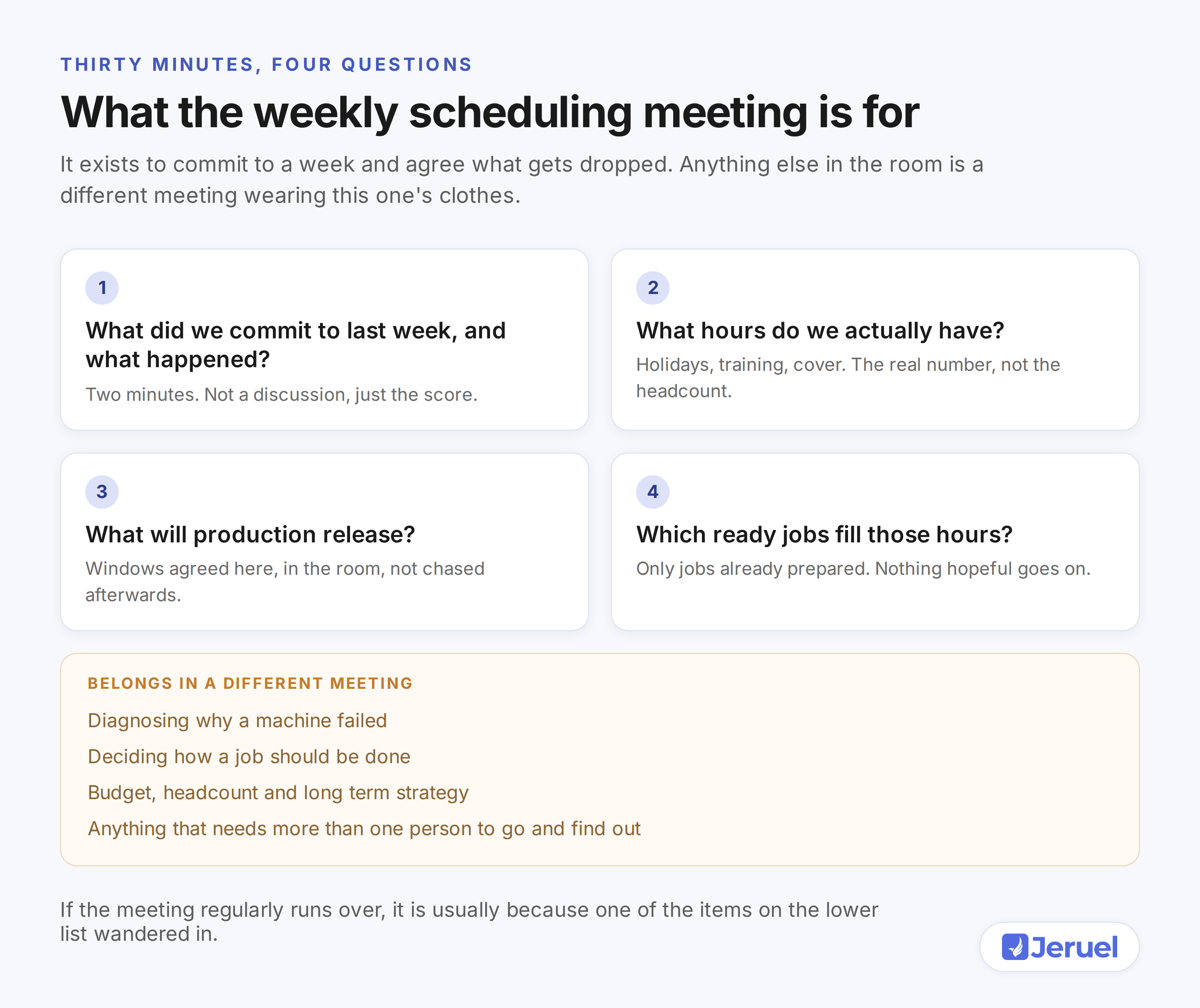
Notice what is on the lower list. Diagnosing a failure, deciding how a job should be done, budget conversations. All of those are real and necessary. None of them belong here, because they involve different people and they do not need to happen weekly.
When this meeting runs long, it is almost always because one of those wandered in and nobody sent it back out.
Who should be in the room
Four roles, and you can usually name the people.
Somebody who owns the schedule and will hold the pen. Somebody from operations who can genuinely commit to releasing equipment. A maintenance supervisor who knows what the crew can actually absorb. And whoever knows the parts position, if that is a separate person.
The test for anyone else is simple. Will they make a decision in this meeting? If they are only receiving information, send them the outcome instead.
The operations point is the one worth defending. If the person from production cannot commit to a window without checking, the meeting cannot finish its job, and you end up with a schedule built on maybes.
Only ready jobs go on
This is the rule that changes a meeting most, and it is the one plants resist hardest.
A job goes on the schedule only if it is genuinely prepared. Parts in hand or on a confirmed date. Steps written. Access understood. Hours estimated.
Not ready means it stays off, even if it is urgent, even if somebody important is asking about it. Urgency does not make a job ready. It just makes an unready job more disappointing when it fails to run.
The first week you apply this, the schedule will look thin, and that is uncomfortable. What you get in exchange is a week where the things you said would happen actually happen. That is worth more than a full schedule everyone privately discounts.
Leave room for the week to go wrong
A schedule packed to a hundred per cent of available hours will break on Monday, because something always comes up.
Most plants schedule around eighty per cent of their hours and keep the rest for emergent work. If you have a rough sense of how much breaks in a typical week, use that number rather than a rule of thumb.
What matters is that the buffer is deliberate. When it is planned for, an emergency uses the buffer. When it is not, an emergency destroys the schedule and takes three planned jobs with it.
Start with what happened last week
Open with two minutes on last week's commitments. What did we say we would do, what got done, what did not.
Keep it factual. This is not the moment to litigate why job four slipped. It is the moment for everyone to see whether the schedule is being believed.
That short review does something no amount of encouragement can. It makes the commitment feel real, because everyone knows it will be read back next week.
If the same reason for slipping shows up three weeks running, that is worth a separate conversation. Note it, and move on.
Finish with a decision, not a discussion
The meeting should end with a named schedule. Which jobs, which days, which people, which windows.
Send it out the same day, one page. Everyone who was in the room, plus the crews who will do the work.
The value of writing it down is not the record. It is that anything vague gets spotted while people can still fix it. Half the arguments about what was agreed would never happen if the agreement was on a page within the hour.
Protect the slot
Same day, same time, every week, even in a bad week. Especially in a bad week.
Cancelling this meeting because the week is busy is exactly backwards. Busy weeks are when the coordination is worth most. And once it moves twice, it starts drifting toward not happening at all.
Thirty minutes is usually enough if the four questions are the only agenda. If it consistently needs an hour, something from the lower list has moved in.
What to change first
Take next week's proposed schedule and mark every job ready or not ready.
Run the meeting with only the ready ones. Then compare what you committed to with what actually happened, and do the same the following week.
Two or three weeks of that will tell you more about your planning than any measure will. It also does it in front of the people who can fix it.